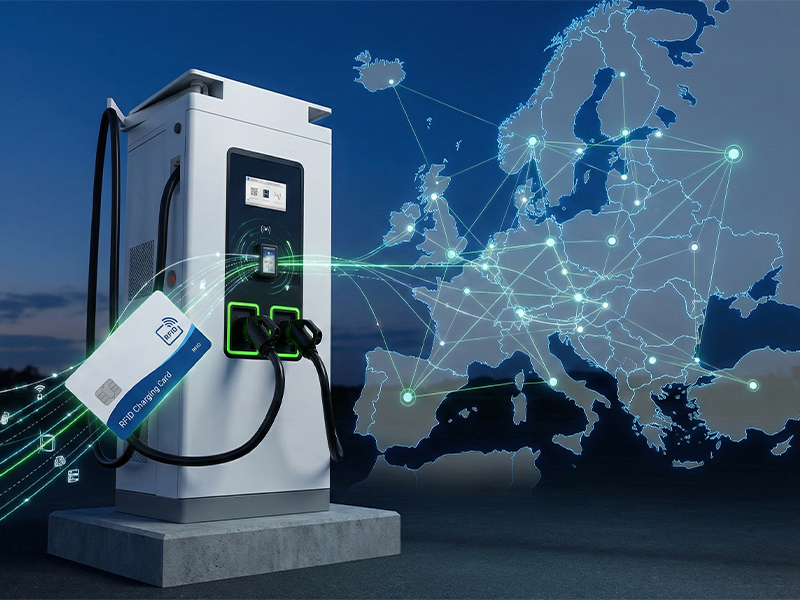
La itinerancia de vehículos eléctricos (también conocida como interoperabilidad) permite a los conductores de vehículos eléctricos utilizar un único método de identificación (por ejemplo, una tarjeta RFID o una aplicación) para cargar y pagar en diferentes redes de operadores de puntos de carga. Elimina las barreras entre operadores, de forma similar a como los usuarios de teléfonos móviles se conectan automáticamente a las redes locales cuando viajan al extranjero.
Análisis desde la perspectiva del entorno de aplicación
El núcleo de la itinerancia es la “conectividad sin fisuras”, que se aplica sobre todo en viajes interregionales y mercados abiertos con múltiples operadores.
Viajes transfronterizos e interestatales de larga distancia: En Europa o Norteamérica, los conductores que cruzan fronteras no necesitan descargarse todas las aplicaciones de recarga locales. A través de centros de itinerancia como Hubject o Gireve, los conductores pueden utilizar su cuenta de proveedor de servicios de movilidad eléctrica (eMSP) para activar cargadores en regiones extranjeras. Esto es crucial para construir corredores de movilidad eléctrica continuos.
Carga pública urbana altamente fragmentada: En ciudades con una docena de marcas de recarga diferentes, la aplicación de protocolos de itinerancia (como OCPI) permite a las plataformas agregadoras (como las Apps de navegación) activar directamente todos los cargadores asociados. Esto simplifica drásticamente el recorrido del usuario, evitando la frustración de tener “un teléfono lleno de Apps de carga”.”
V2G
Carga inteligente de vehículos eléctricos
Itinerancia EV
Operador de flota de vehículos eléctricos
Equilibrio dinámico de la carga
Respuesta a la demanda
CPO
Carga de CA
V2V
V2L
V2H
Scroll al inicio
Concertar una cita
Rellene el siguiente formulario y en breve nos pondremos en contacto con usted.