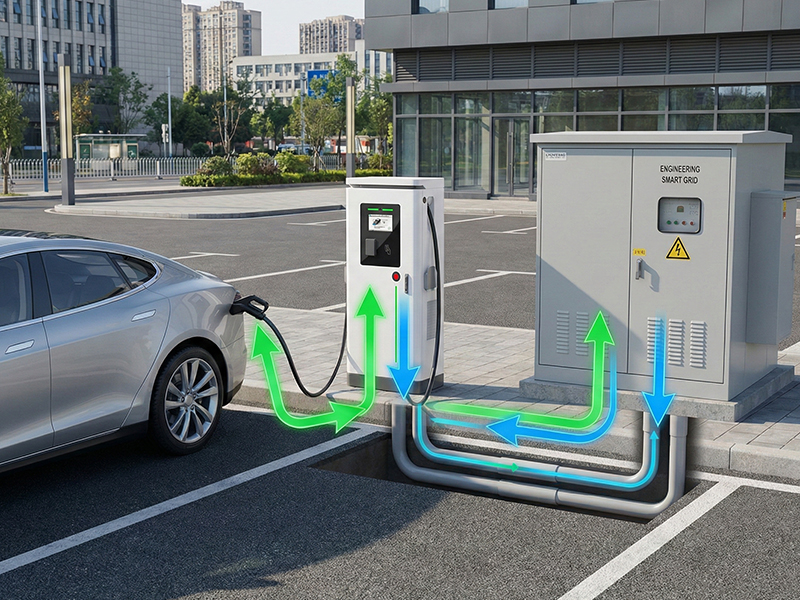
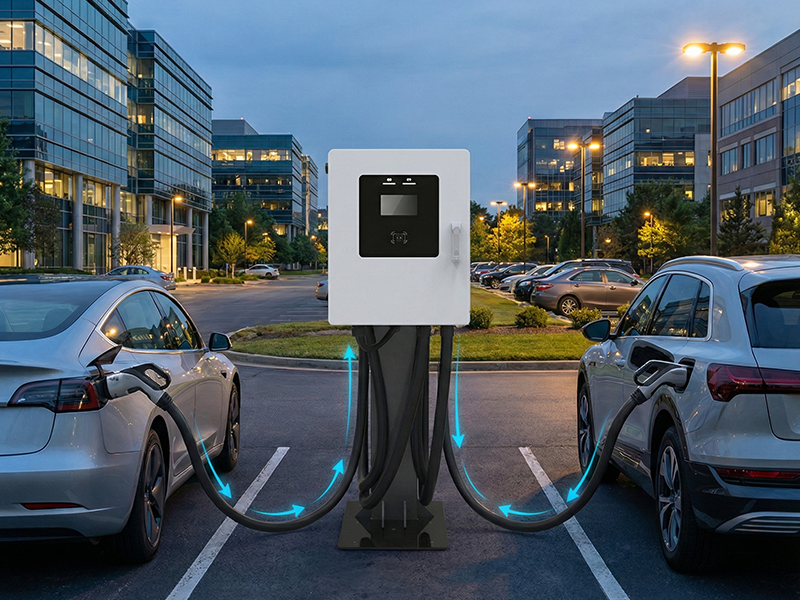
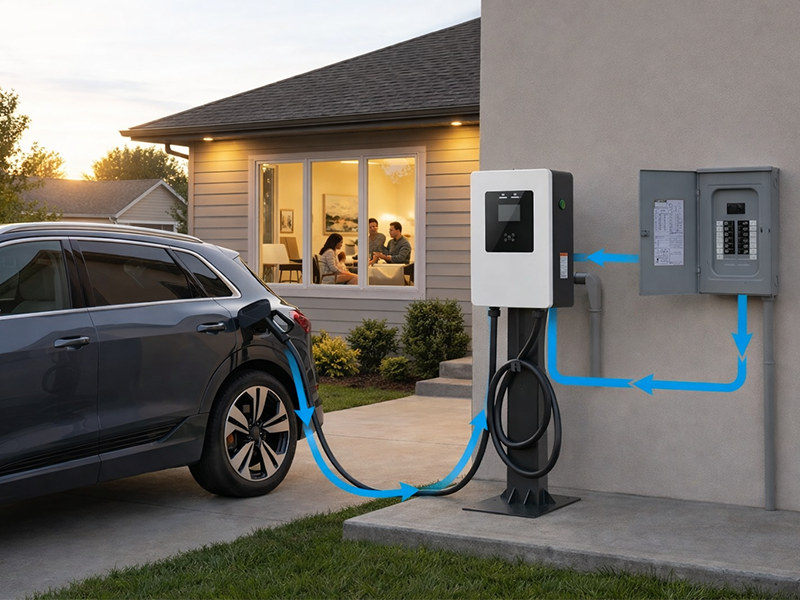
A Resposta do Lado da Procura refere-se aos consumidores de eletricidade (neste contexto, proprietários de VEs ou Operadores de Pontos de Carregamento) que alteram ativamente os seus padrões de carregamento habituais em resposta a sinais da rede (tais como incentivos de preços ou instruções de corte de carga de emergência). Representa uma mudança do “consumo passivo” para a “interação ativa”, com o objetivo de equilibrar a oferta e a procura de eletricidade para evitar a sobrecarga da rede.
Análise numa perspetiva de ambiente de aplicação
A essência da DSR é a “flexibilidade”, e a sua aplicação ocorre normalmente quando a rede regional está sob tensão.
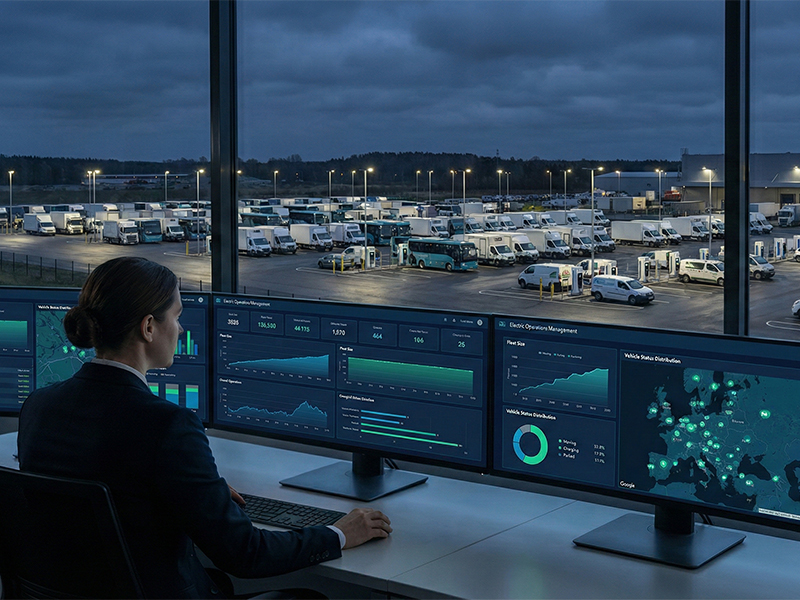
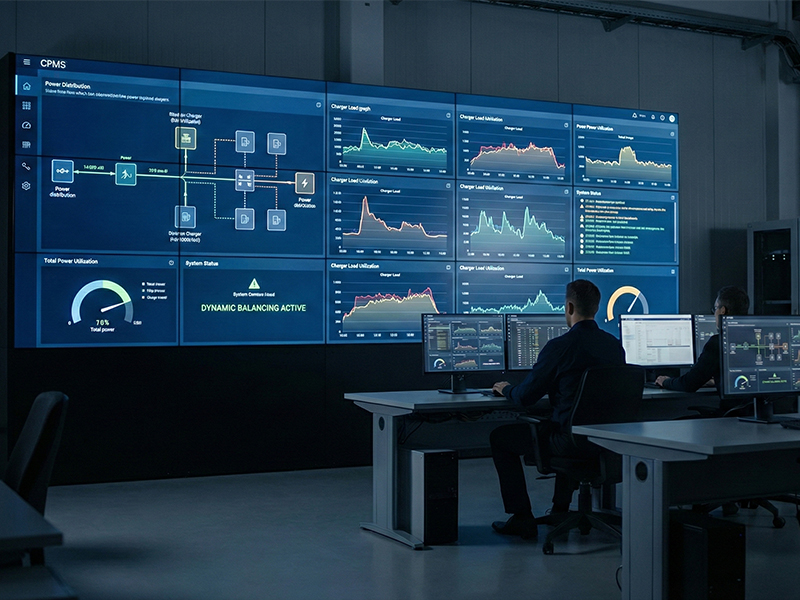
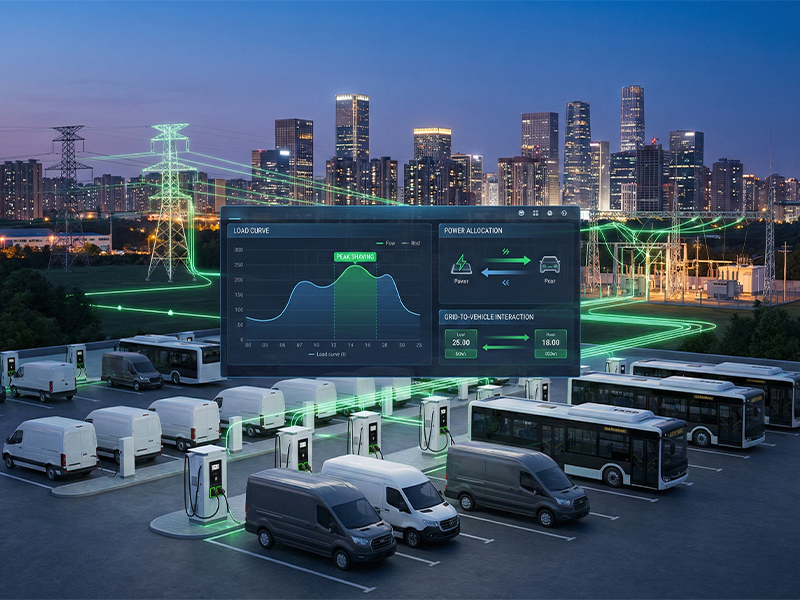
Redução do pico de emergência da rede: Quando as ondas de calor extremas ou as vagas de frio levam as cargas da rede aos seus limites, os mecanismos DSR são acionados. Através de plataformas de gestão de carregamento, milhares de carregadores activos reduzem temporariamente a potência ou fazem uma pausa no carregamento. Isto evita apagões contínuos, garantindo energia para as casas e instalações críticas, enquanto os proprietários de VE recebem créditos nas facturas ou recompensas.
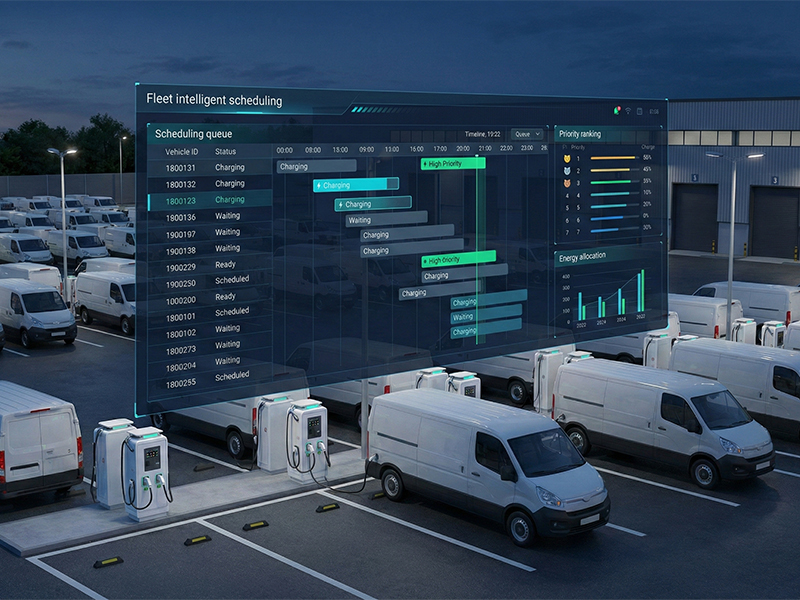
Controlo dos custos das frotas comerciais: Para os parques logísticos com grandes necessidades de carregamento, a DSR responde aos sinais de “picos de preços”, evitando automaticamente o carregamento durante as janelas mais caras. Isto não é apenas poupança de energia; é uma ferramenta de arbitragem financeira alimentada por algoritmos, reduzindo significativamente as despesas operacionais (OPEX).
V2G
Carregamento inteligente de veículos eléctricos
Roaming EV
Operador de frota de veículos eléctricos
Balanceamento de carga dinâmico
Resposta do lado da procura
CPO
Carregamento AC
V2V
V2L
V2H
Deslocar para o topo
Marcação de consulta
Preencha o formulário abaixo e entraremos em contacto em breve.