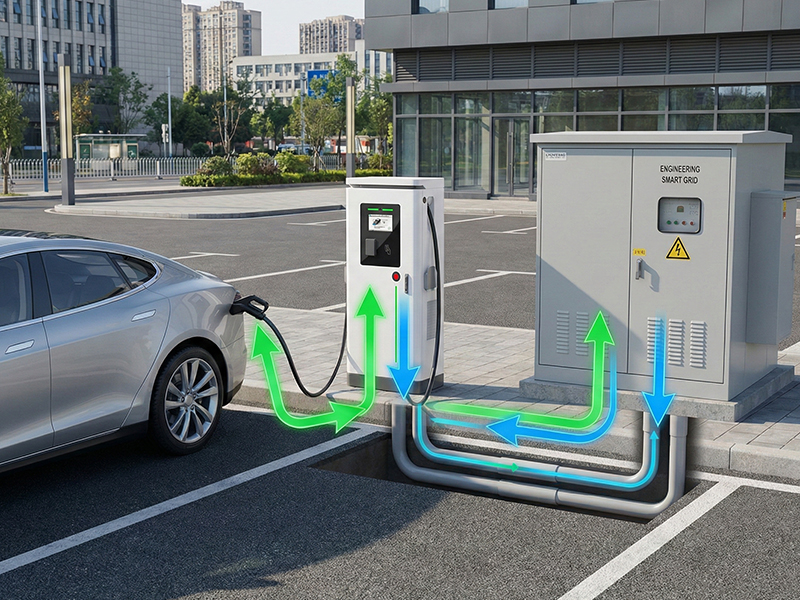
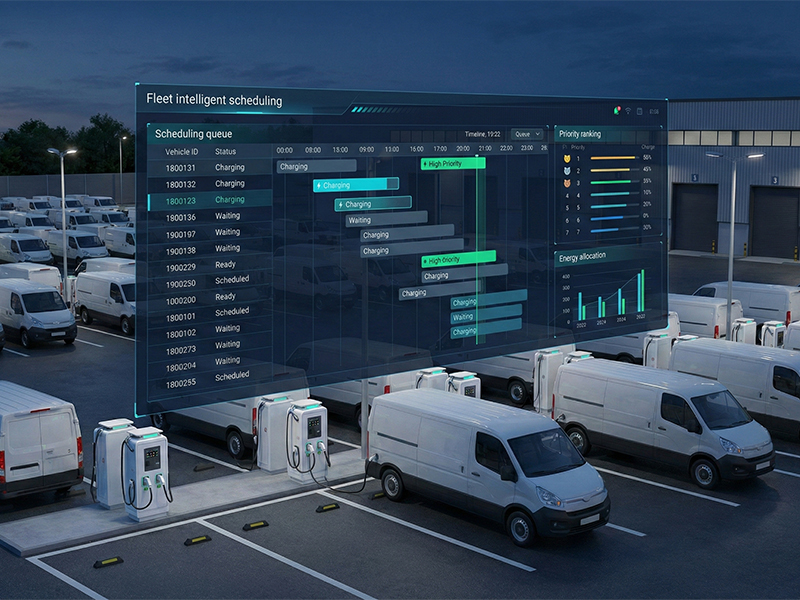
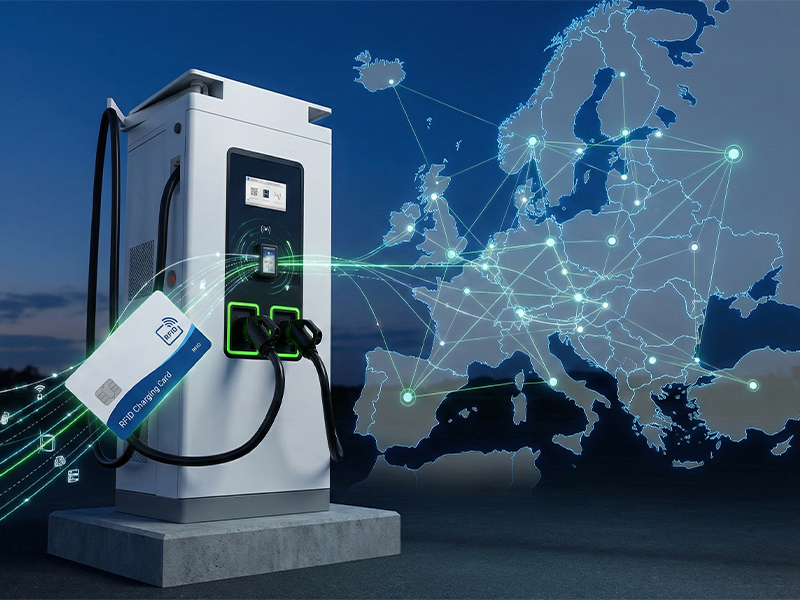
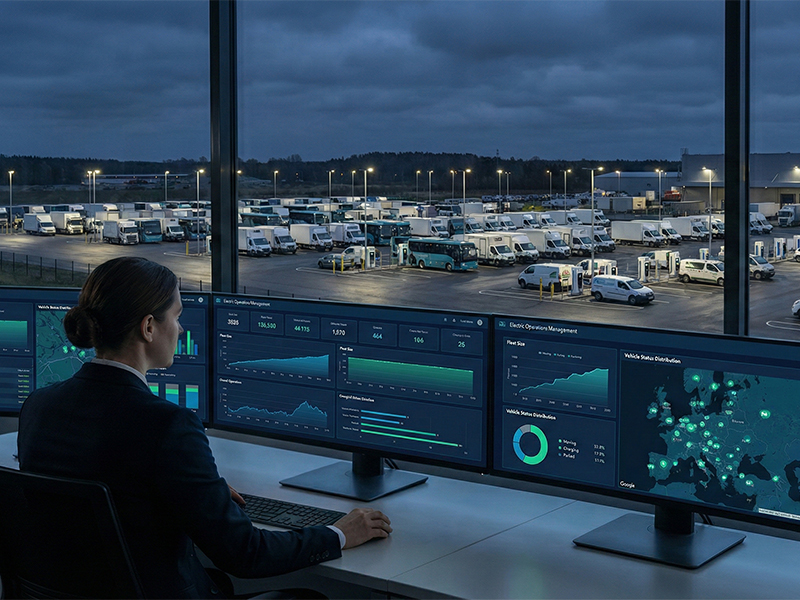
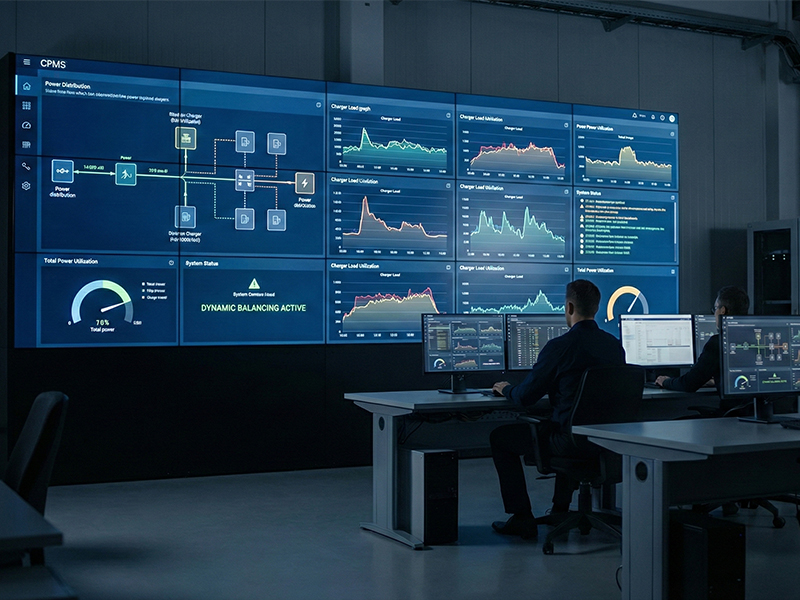
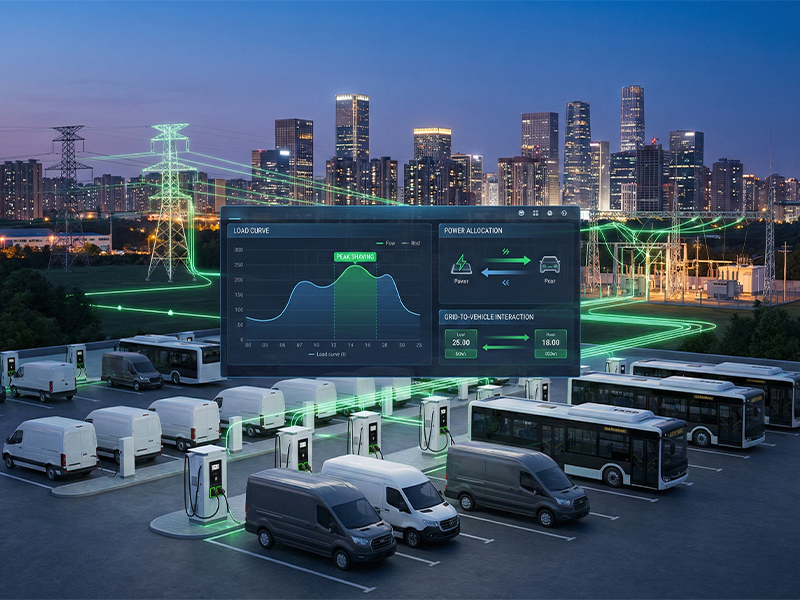
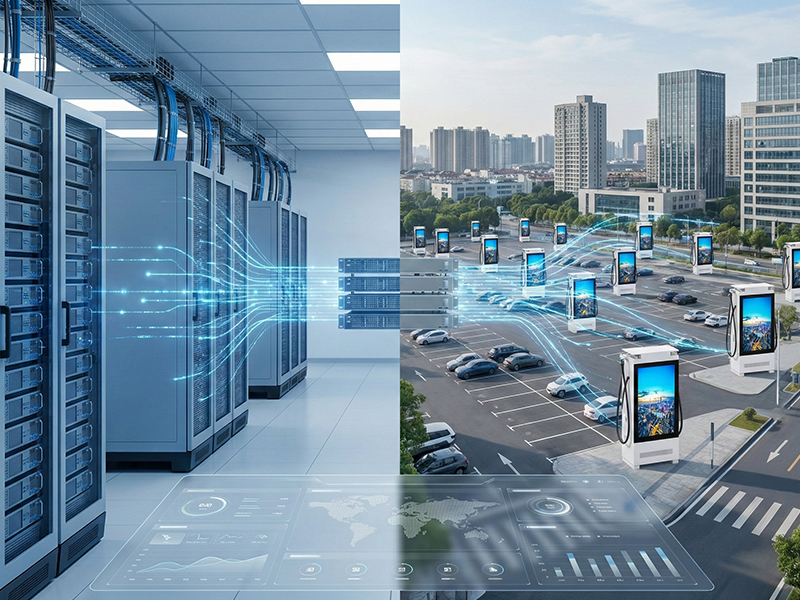
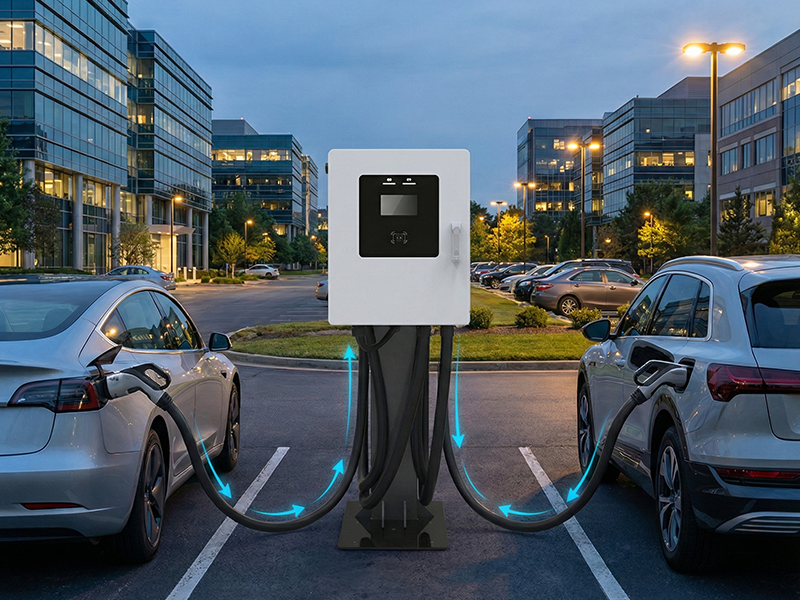
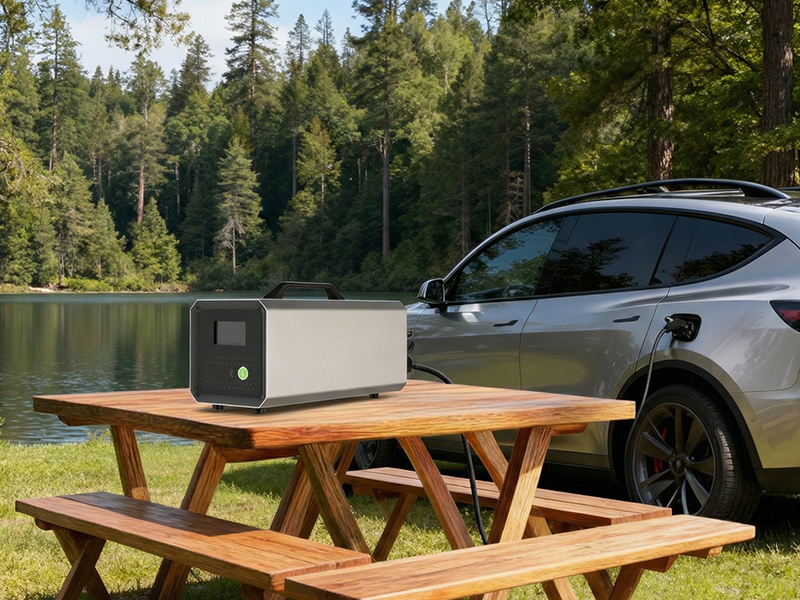
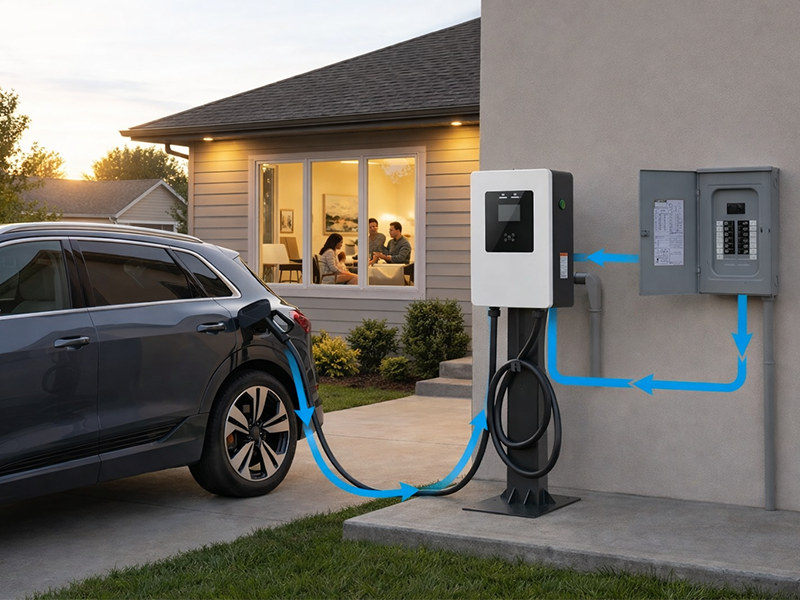
Балансировка нагрузки - это техническая стратегия рационального распределения ограниченных энергетических ресурсов между несколькими зарядными точками. По сравнению с конкретно упомянутой “динамической балансировкой нагрузки”, это более широкая концепция, охватывающая все, от статического ограничения тока до динамической регулировки, направленная на предотвращение электрических перегрузок и обеспечение безопасной работы инфраструктуры в рамках существующей мощности сети.
Анализ с точки зрения прикладной среды
Балансировка нагрузки применяется в основном в сценариях, где мощность является дефицитным ресурсом.
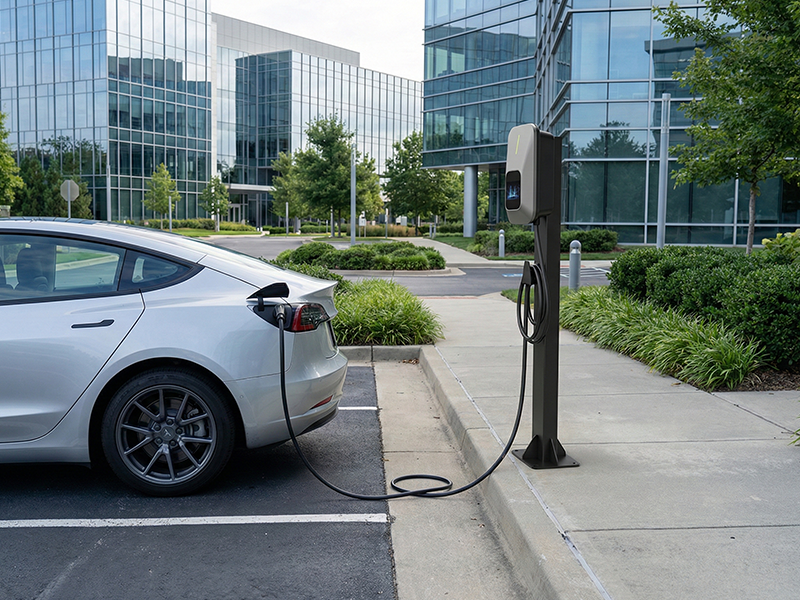
Офисные здания и кампусы: Если в офисном здании установлено 20 зарядных устройств, но трансформатор здания может поддерживать только 10, работающих на полной скорости, в дело вмешивается система распределения нагрузки. Она равномерно распределяет мощность или чередует сеансы зарядки (например, по 15 минут на группу). В таких условиях можно избежать дорогостоящих затрат на модернизацию инфраструктуры.
Многоуровневая парковка Гаражи: В многоэтажных зданиях расстояния между кабелями велики, что приводит к перепадам напряжения. Система балансировки нагрузки контролирует не только распределение электроэнергии, но и уровни напряжения на разных этажах. Если на одном этаже подключается много автомобилей, система автоматически ограничивает ток, чтобы предотвратить перегрев местной проводки и возникновение пожара.
V2G
Интеллектуальная зарядка EV
Роуминг EV
Оператор парка электромобилей
Динамическая балансировка нагрузки
Реагирование на спрос
CPO
Зарядка переменным током
V2V
V2L
V2H
Прокрутить вверх
Запланировать встречу
Заполните форму ниже, и мы свяжемся с вами в ближайшее время.